Basement Insulation Edmonton
Basement insulation helps reduce heat loss, improve comfort, and protect against moisture issues in Edmonton homes. We install Alberta-made Johns Manville Climate Pro® using the Blow-In Blanket System (BIBS), a high-performance, eco-friendly insulation solution. This system provides consistent coverage while helping control air movement and vapour transfer without chemicals or settling. Properly installed basement insulation supports a warmer, drier, and more energy-efficient home.
Why Basement Insulation Matters
Basements are one of the largest sources of heat loss in Edmonton homes, especially when foundation walls are under-insulated or insulated with outdated materials. Cold concrete surfaces naturally draw heat out of the home, affecting comfort on every level.
Without proper insulation, basements can feel damp, cold, and uncomfortable year-round. These conditions can also contribute to condensation on foundation walls, which may lead to long-term moisture concerns if left unaddressed.
Proper basement insulation focuses on consistent wall coverage, minimizing air movement, and supporting vapour control. When done correctly, it helps stabilize indoor temperatures and improves overall home performance.
Using dense-pack insulation systems like BIBS with Climate Pro® allows basement walls to be insulated evenly, reducing common problem areas such as gaps, compression, and uneven fill.
Blow-In Blanket System (BIBS)
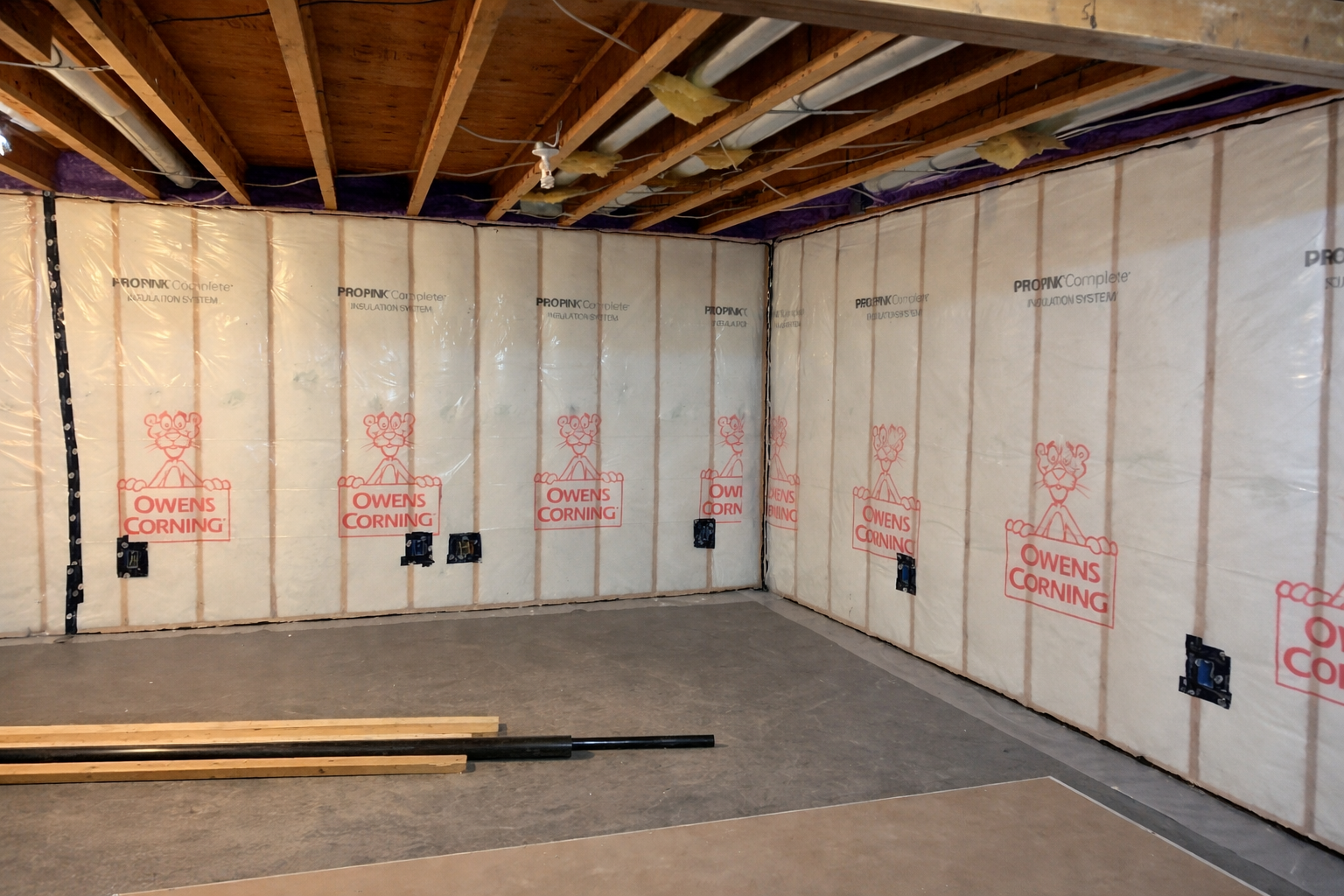
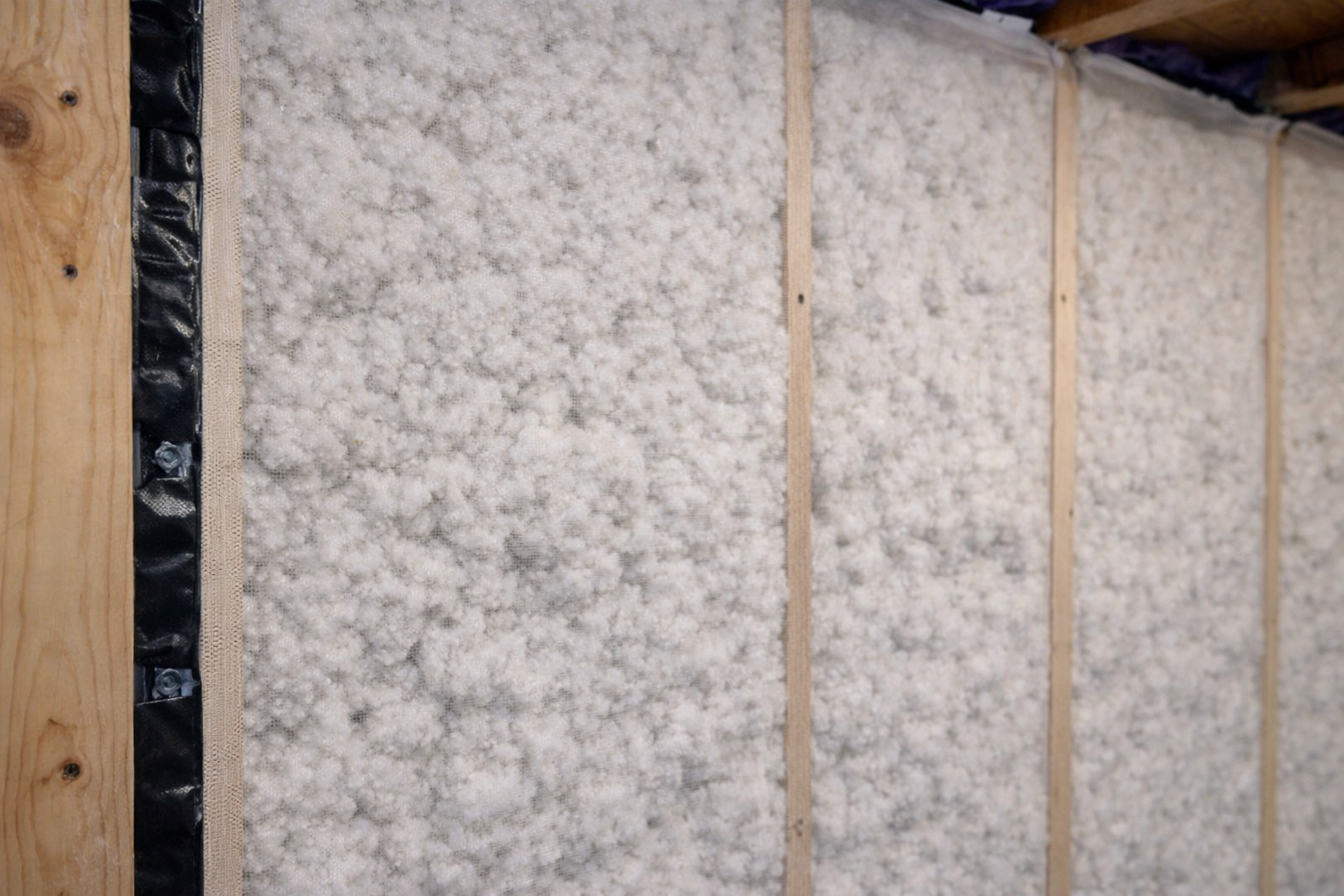
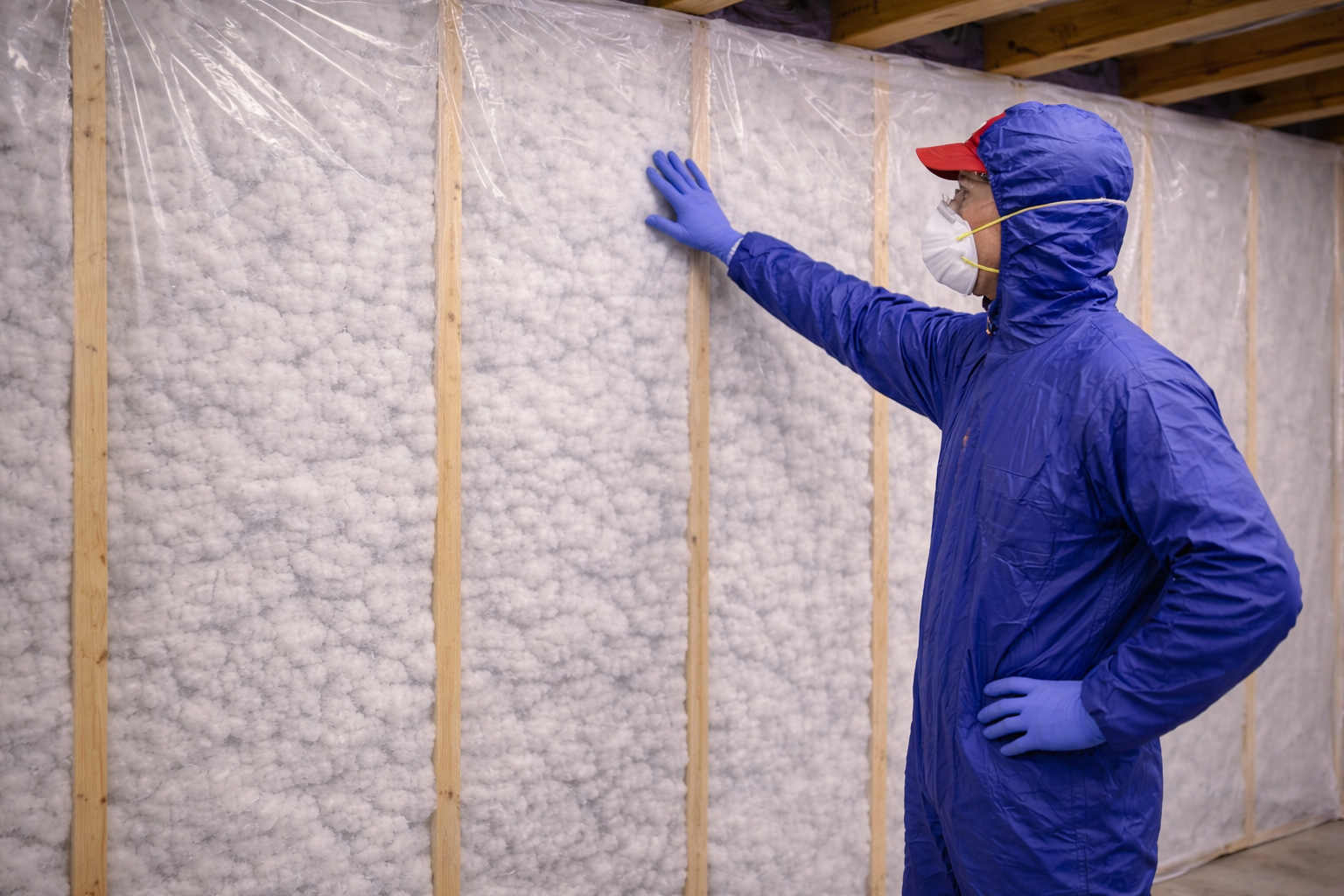
The Blow-In Blanket System is a high-performance insulation method that uses a fabric mesh to hold dense-pack fiberglass insulation securely in place within wall cavities.
This system allows insulation to be installed at a consistent density, filling cavities completely and reducing the risk of voids, settling, or compression over time.
For basement applications, BIBS helps maintain continuous insulation coverage across studs and corner posts, improving overall thermal performance.
Because the insulation is evenly distributed, BIBS delivers more predictable results compared to traditional batt systems.
Climate Pro® Blown-In Insulation
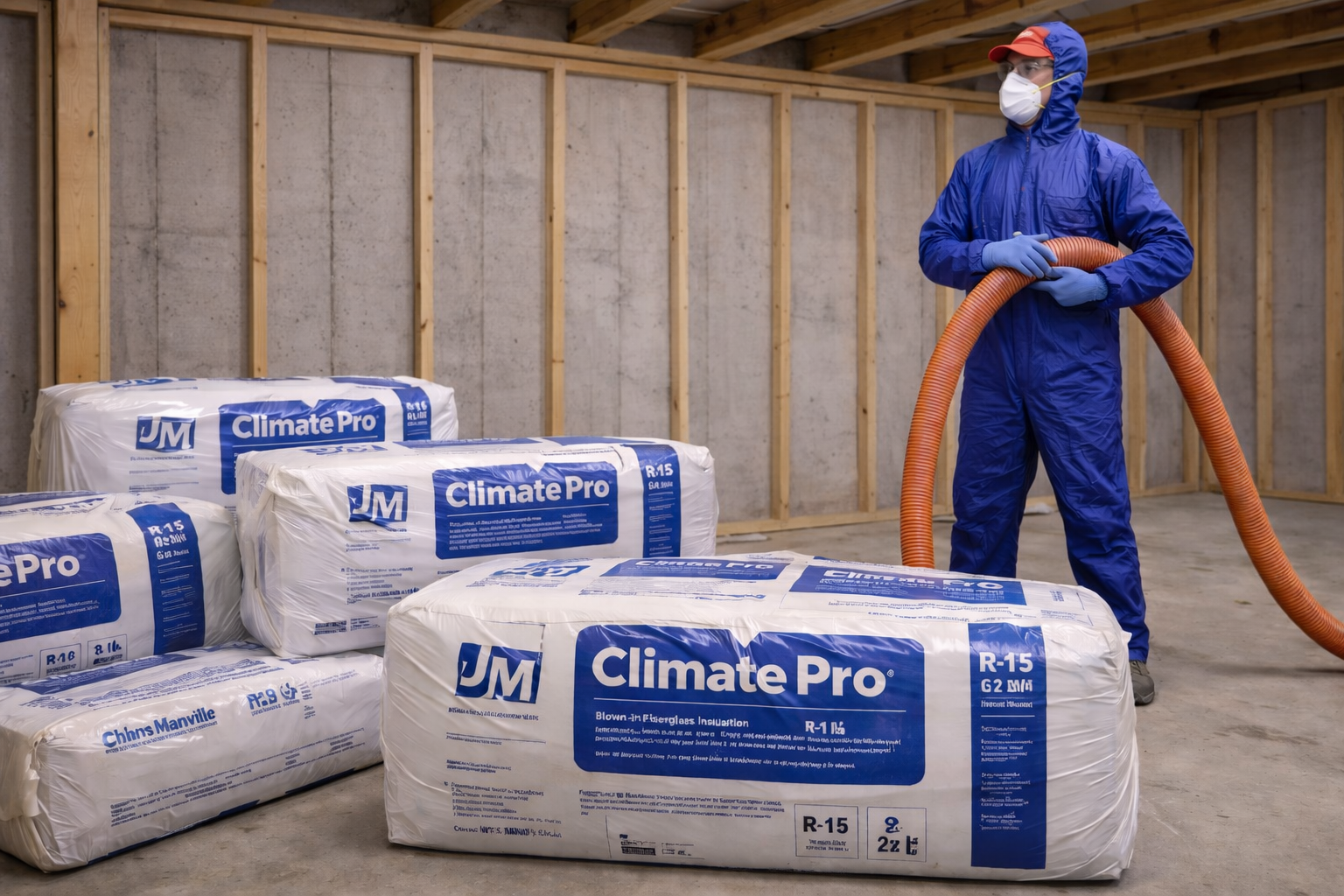
Johns Manville Climate Pro® is an Alberta-made blown-in fiberglass insulation designed for consistent thermal performance and long-term durability.
When installed as part of a Blow-In Blanket System, Climate Pro® helps reduce air movement within wall assemblies and supports effective vapour control.
This insulation is non-settling, chemical-free, and made with recycled materials, making it a reliable and environmentally responsible choice for basement insulation.
When installed to the correct density, Climate Pro® insulation helps maintain consistent thermal performance over time without settling or degradation, making it well suited for basement wall applications in Edmonton’s climate.
Why Climate Pro® Insulation Installed Using BIBS Performs Better
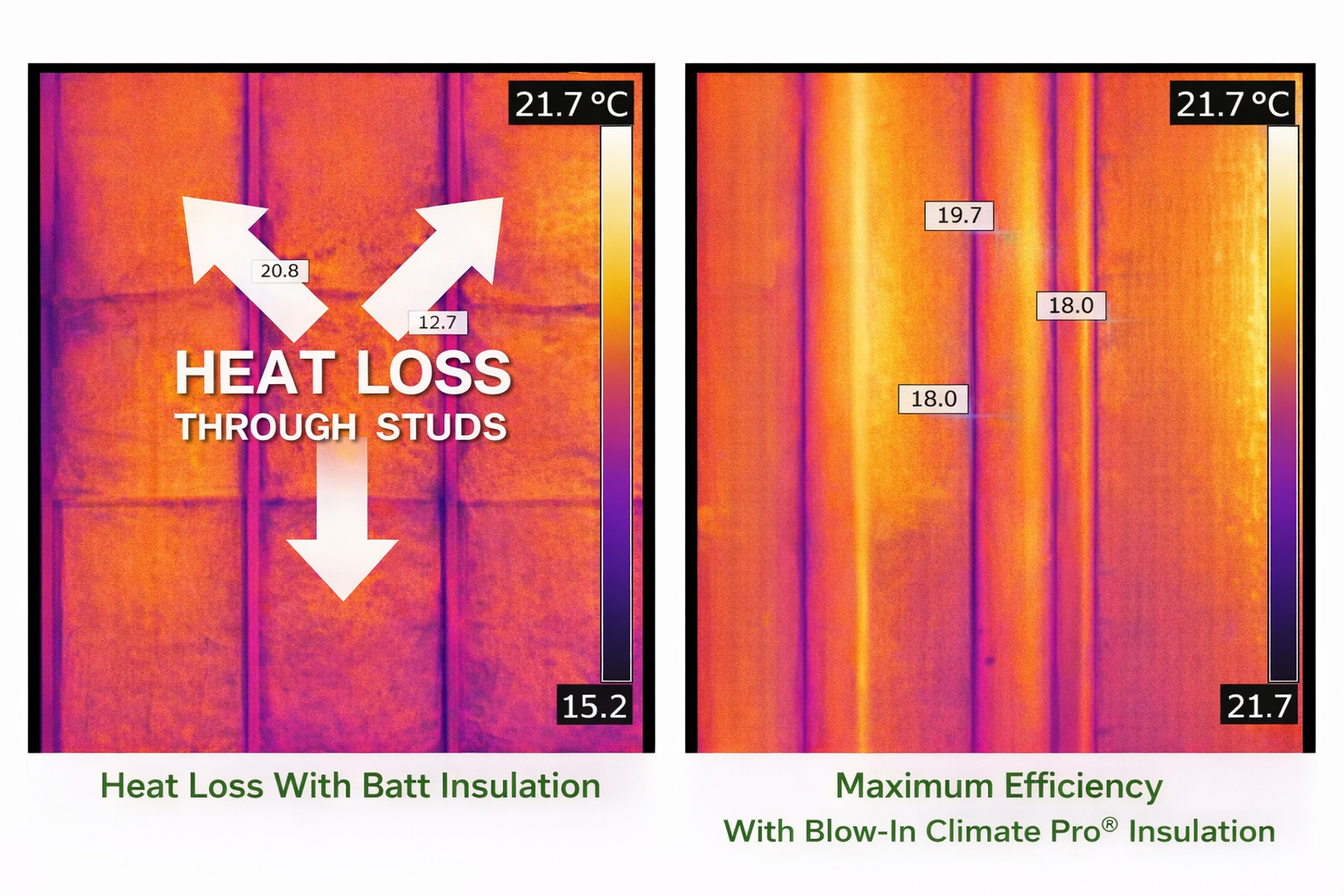
Not all insulation performs the same once it’s installed in real-world conditions. Traditional batt insulation often leaves gaps, compression points, and air pathways that allow heat to escape through basement walls.
Dense-pack systems like Climate Pro® blown-in insulation are designed to fill wall cavities completely, reducing air movement and limiting heat loss across studs and corner posts.
Thermal imaging clearly shows the difference in performance, with more consistent surface temperatures and reduced heat transfer when dense-pack insulation is installed correctly.
Professional Basement Installation
Basement insulation performance depends heavily on proper installation, especially in moisture-sensitive below-grade environments.
Our installation process focuses on complete cavity fill, proper density, and careful attention to corners, penetrations, and transitions.
By using proven systems and experienced installers, we help ensure basement insulation performs as intended throughout Edmonton’s climate extremes.
The result is a warmer, more comfortable basement with improved energy efficiency throughout the home.
Our Basement Insulation Process
List of Services
-
Basement Wall AssessmentList Item 1
We begin by assessing the basement walls, framing, and overall site conditions. This ensures the space is properly prepared and that the insulation system selected is appropriate for the structure and moisture conditions.
-
Preparation of Wall CavitiesList Item 2
Before installation, wall cavities are prepared and any necessary adjustments are made to allow for consistent insulation coverage. This step helps prevent gaps, compression, or uneven density during installation.
-
Climate Pro® Blow-In Insulation Installed Using BIBSList Item 3
Johns Manville Climate Pro® blown-in fiberglass insulation is installed using the Blow-In Blanket System (BIBS) to achieve full, uniform coverage in basement wall cavities. The BIBS installation method allows Climate Pro® to be installed at the correct density, helping limit air movement and improve thermal performance in below-grade wall assemblies.
-
Detail Work and Quality ControlList Item 4
Corners, penetrations, and transition areas are carefully addressed to maintain continuous insulation coverage. Proper detailing helps reduce heat loss at common weak points in basement wall assemblies.
-
Final Inspection Before Finishing
Once installation is complete, the insulation is inspected to confirm uniform coverage and proper density. This ensures the system is ready for vapour barrier and finishing stages.
Instead of offering one-size-fits-all solutions, we take a system-based approach to attic rain and ice damming problems. By addressing insulation, air sealing, and ventilation together, we help homeowners achieve lasting results and avoid recurring moisture issues.
gET A FREE BASEMENT INSULATION QUOTE
Get a Free Quote
Basement insulation FAQ's
What is the best insulation for basement walls in Edmonton?
High-performance blown-in fiberglass systems like Johns Manville Climate Pro® installed using the Blow-In Blanket System (BIBS) provide consistent cavity fill and strong thermal performance for basement wall applications in Edmonton’s climate.
Will basement insulation make my main floor warmer?
Yes. Cold basement walls can pull heat out of the home, affecting comfort upstairs. Properly insulating basement walls helps stabilize temperatures and reduce heat loss throughout the house.
Does basement insulation help reduce condensation?
Proper insulation helps keep interior wall surfaces warmer, which can reduce condensation risk on foundation walls. Correct installation and attention to air movement are key factors in long-term performance.
Is the Blow-In Blanket System suitable for basements?
Yes. The Blow-In Blanket System allows Climate Pro® insulation to be installed at a consistent density, helping ensure uniform coverage in basement wall cavities.
How long does basement insulation installation take?
Most basement insulation projects can be completed efficiently once the space is ready. The exact timeline depends on the size of the basement and the framing layout.